


Welcome to the ultimate guide to securing a rental car in Curacao and navigating the island like a seasoned local. If you are planning a trip to this vibrant Dutch Caribbean island, you are likely dreaming of its hidden coves, pastel-colored colonial architecture, and rugged national parks. But to truly experience the magic of this destination, relying on taxis or the limited public transportation system simply will not cut it. You need the freedom of the open road. Best way to find the rental car curacao.
Getting a rental car curacao style is the single most important decision you will make for your itinerary. Having your own set of wheels allows you to chase the sunset at Playa Porto Mari, grab a late-night bite at a local truk’i pan (food truck), and explore the untamed beauty of the island’s western tip at your own pace.
However, organizing a car rental curacao vacationers can trust requires a bit of insider knowledge. From understanding the nuances of local insurance policies to figuring out how the gas stations work, this comprehensive guide covers everything you need to know.
Why Renting a Car is Essential in Curacao
Curacao is significantly larger than many of its Caribbean neighbors. Stretching about 40 miles long and up to 10 miles wide, the island is spread out. While the capital city of Willemstad is wonderfully walkable, the true gems of the island—the pristine, secluded beaches, the flamingos of Jan Kok, and the dramatic hiking trails of Christoffel National Park—are located far from the city center.
The Limitations of Public Transport
While Curacao does have a bus system (consisting of large “Konvoi” buses and smaller vans), the schedules can be unpredictable, and routes are primarily designed for locals commuting to work and school, rather than tourists trying to reach secluded beaches. Taxis are available, but they are unmetered and can become incredibly expensive if you plan on taking multiple trips a day.
Unmatched Freedom and Flexibility
When you secure a rental car curacao visitors highly recommend, you are buying time and freedom. You can wake up early to beat the crowds to Grote Knip, stay late for a romantic dinner in Pietermaai without worrying about finding a cab back to your resort, and stop at roadside fruit stands whenever you please. Simply put, to fully unlock the island’s potential, you need to drive.
Pre-Booking Essentials: Driver Qualifications
Before you dive into comparing car rental deals, you must ensure you meet the legal and agency-specific requirements to get behind the wheel.
Is a US Driver’s License Valid in Curacao?
One of the most common questions North American travelers ask is, is a US driver’s license valid in Curacao? The short answer is: absolutely. You do not need an International Driving Permit (IDP) if you hold a valid driver’s license from the United States, Canada, the European Union, or the United Kingdom.
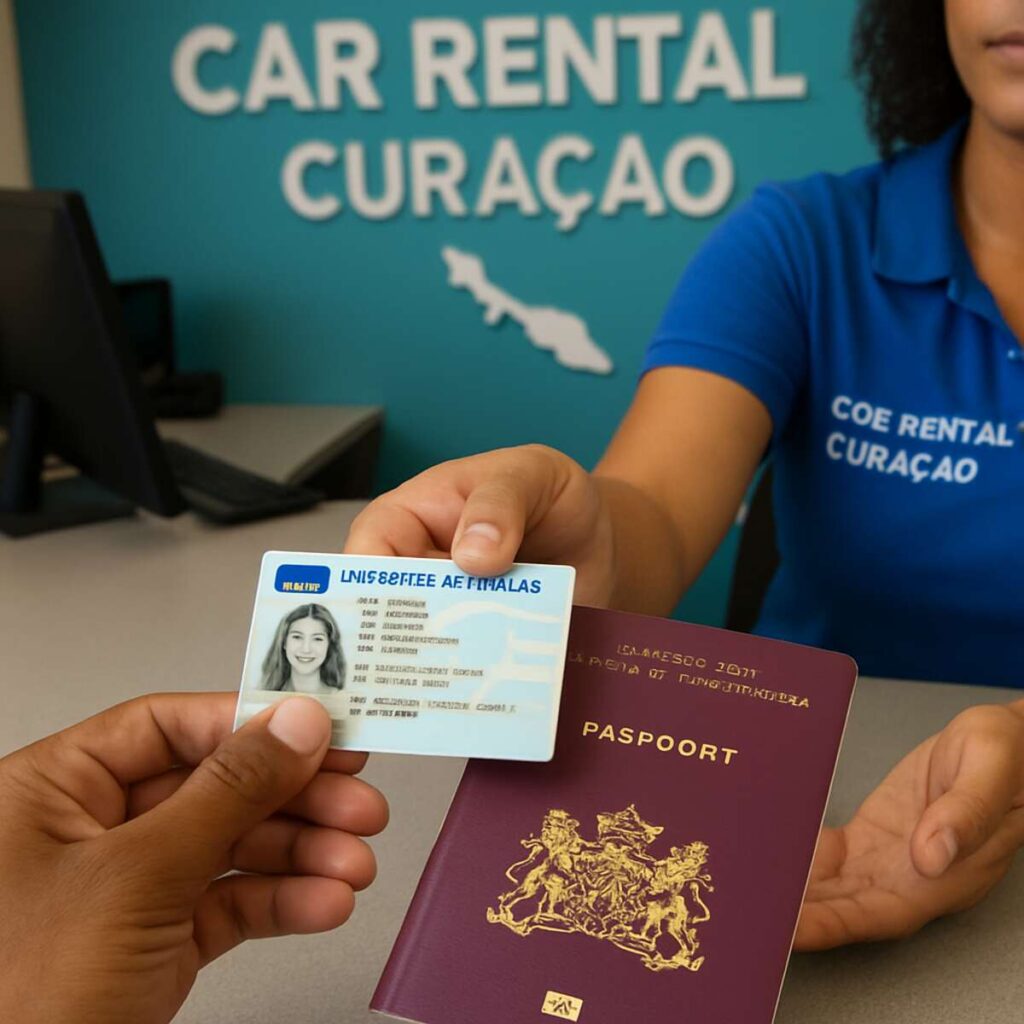
As long as your license is printed in the Roman alphabet and is valid for the entirety of your stay, you can simply present it at the rental counter along with your passport and a major credit card. If your license is printed in a non-Roman alphabet (like Arabic, Japanese, or Cyrillic), you will need to obtain an International Driving Permit before your trip.
Age Requirements for Renting a Car
The legal driving age in Curacao is 18, but the age requirements for renting a car are noticeably stricter.
- Minimum Age: Most rental agencies require the primary driver to be at least 21 years old. Some boutique or local agencies may even require the driver to be 23 or 25.
- Young Driver Surcharges: If you are between the ages of 21 and 24, be prepared for a “young driver fee.” This daily surcharge can range from $10 to $25 per day, depending on the agency.
- Senior Driver Limits: A few agencies impose a maximum age limit, typically around 70 to 75 years old. If you fall into this demographic, always read the terms and conditions of your specific rental agreement before booking.
Choosing the Right Vehicle for Your Itinerary
Curacao’s terrain is diverse. While the eastern side of the island (Banda Ariba) and the city of Willemstad feature well-paved, modern roads, the western side (Banda Abou) offers a mix of smooth highways and rugged dirt paths leading to secluded beaches.
Do I Need a 4×4 in Curacao?
Many adventurous travelers wonder, do I need a 4×4 in Curacao? For 90% of tourists, the answer is no. A standard economy, compact, or mid-size vehicle is more than sufficient for navigating the island, driving to Willemstad, and reaching the vast majority of popular beaches. The main roads are paved and generally well-maintained.
However, there are a few specific scenarios where a 4×4 or a vehicle with higher ground clearance (like an SUV or a Jeep) is beneficial:
- Christoffel National Park: While standard cars can drive the paved routes of the park, some off-shoot dirt roads are easier to navigate with an SUV.
- Remote Beaches: A few hidden gems, such as Playa San Juan, require driving down unpaved, rocky, and heavily rutted dirt roads for several miles. A standard economy car can make it if you drive very slowly and carefully, but an SUV or a 4×4 provides much more peace of mind.
- Shete Boka National Park: The terrain here can be dusty and rocky, making higher clearance preferable.
Best Car for Exploring Westpunt Beaches
If you plan on spending most of your time beach-hopping on the western side of the island, the best car for exploring Westpunt beaches is a mid-size SUV or a sturdy crossover. These vehicles offer the perfect balance: they are compact enough to easily park in tight beach lots, but they have enough ground clearance to handle the occasional pothole or gravel road leading to less-developed coves.
If you are traveling on a strict budget, an economy car will still get you to Westpunt favorites like Playa Lagun, Cas Abao, and Kenepa Grandi without any issues whatsoever, as these specific beach access roads are fully paved.
Where and How to Book Your Car
The logistics of where you pick up your car and who you rent from can significantly impact both your budget and your overall vacation experience.
Booking a Car at Hato International Airport
For maximum convenience, booking a car at Hato International Airport (CUR) is the most popular choice. After clearing customs and collecting your luggage, you simply walk out of the arrivals hall and cross the street to the dedicated car rental pavilion.
- Pros: Immediate mobility. You don’t have to pay for an expensive taxi transfer to your hotel. You can start exploring the moment you land.
- Cons: Airport rentals often come with premium location surcharges and airport taxes. Additionally, lines can be long if multiple large flights land simultaneously.
If you want to save money, consider taking a taxi to your hotel for the first day, relaxing, and then having a rental car delivered to your resort the next morning. Many agencies offer free hotel delivery and pick-up.
Local vs International Rental Agencies
When browsing for a vehicle, you will quickly notice a divide: local vs international rental agencies.
International Brands (Alamo, Hertz, Avis, Budget, Enterprise):
- Familiarity: You know exactly what to expect regarding corporate standards.
- Loyalty Programs: You can earn or use points.
- Newer Fleets: Generally, international brands refresh their fleets more frequently.
- Cost: Often noticeably more expensive, with higher deposits required.
Local Curacao Agencies (Just Drive, Prins Car Rental, D&D Car Rental, etc.):
- Personalized Service: Local operators frequently offer VIP services, like greeting you with a sign at arrivals and walking you straight to your car, bypassing the rental counter lines.
- Better Rates: They usually offer the most competitive pricing and lower security deposits.
- Flexibility: They are often more willing to accept cash deposits or debit cards (though credit cards are still highly recommended).
- Fleet Condition: The cars might have a few more miles on the odometer or minor cosmetic scratches, but they are mechanically sound.
How to Score the Best Car Rental Deals
Finding great car rental deals requires a bit of strategic planning.
- Book in Advance: Curacao is a small island with a finite number of rental cars. During peak season (December through April), vehicles can completely sell out. Book at least two to three months in advance to lock in the best rates.
- Travel in the Shoulder Season: Rates plummet between May and November.
- Look for Long-Term Discounts: Many local agencies offer sliding scale pricing. The per-day rate drops significantly if you rent for 7 days or more.
- Seek Out Unlimited Mileage Vehicle Hire: To truly explore without anxiety, ensure your contract includes unlimited mileage vehicle hire. The vast majority of rentals in Curacao include this as standard, but a few deep-discount brokers might cap you at 100 kilometers a day, charging hefty fees for overages. Always double-check the fine print.
Understanding Contracts, Scams, and Costs
No one wants to read the fine print while on vacation, but spending five minutes reviewing your rental contract can save you thousands of dollars.
How to Avoid Car Rental Scams
While Curacao is generally a very safe and highly regulated tourist destination, disputes over pre-existing damage are the most common source of friction between renters and agencies globally. Here is how to avoid car rental scams and protect your wallet:
- The Walk-Around Video: Before you even put the key in the ignition, take out your smartphone and record a slow, continuous, high-definition video walking around the entire exterior of the car. Get close-ups of the bumpers, the wheel rims (hubcaps are easily scratched), and the roof.
- Interior Photos: Snap photos of the seats, the dashboard, and the fuel gauge (to prove exactly how much gas was in the tank when you started).
- Report Everything: If you see a scratch that is not marked on the rental agency’s checkout diagram, go back inside and make the agent physically mark it and sign off on it before you leave the lot.
- Keep Your Paperwork: Keep your final zero-balance receipt for at least three months after your trip to dispute any unexpected post-vacation credit card charges.
Full Coverage Insurance for Island Rentals
Insurance is where many travelers get confused. When driving on an unfamiliar island with unique road hazards, securing full coverage insurance for island rentals is highly recommended. Let’s break down the acronyms:
- CDW (Collision Damage Waiver): This is the most common insurance. It limits your financial liability if the car is damaged in an accident. However, CDW almost always comes with a deductible (often ranging from $500 to $1,500). If you scratch the car, you pay up to the deductible amount; the insurance covers the rest.
- SCDW (Super Collision Damage Waiver): This is the premium “zero deductible” option. While it increases your daily rental cost, it offers total peace of mind. If you return the car with a dent, you hand over the keys and walk away without paying a dime.
- TP (Theft Protection): Covers the cost of the vehicle if it is stolen.
- Third-Party Liability: Covers damage you cause to other people’s property or medical expenses for others. This is usually required by law and built into the base rate.
A Note on Credit Card Insurance: Many premium travel credit cards offer rental car insurance as a perk. If you plan to rely on your credit card’s coverage, you must decline the rental agency’s CDW. Additionally, you should print out the specific terms from your credit card provider detailing your coverage in Curacao and bring it with you, as some local agencies will demand proof before letting you decline their in-house insurance.
Cost of Renting a Car for a Week
Budgeting is crucial. So, what is the realistic cost of renting a car for a week in Curacao? Prices fluctuate based on the season, vehicle type, and how far in advance you book. Here is a rough breakdown for a standard 7-day rental:
- Economy Car (e.g., Kia Picanto or Hyundai i10):
- Base rate: $250 – $350 per week
- Mandatory taxes/fees: ~$40
- Full Coverage Insurance (Optional): $100 – $140
- Estimated Total: $390 – $530 per week
- Mid-Size SUV (e.g., Hyundai Creta or Kia Sportage):
- Base rate: $400 – $550 per week
- Mandatory taxes/fees: ~$50
- Full Coverage Insurance (Optional): $120 – $160
- Estimated Total: $570 – $760 per week
Keep in mind that these estimates do not include gasoline, which is generally more expensive in the Caribbean than in the United States.
Hitting the Road: Driving in Curacao
Once the keys are in your hand, it is time to hit the road. If you are accustomed to driving in North America or Europe, you will find driving here relatively straightforward, but with a distinct Caribbean flair.
Driving in Curacao as a Tourist
The overall experience of driving in Curacao as a tourist is generally pleasant. You drive on the right-hand side of the road, the steering wheel is on the left side of the car, and the vast majority of local drivers are polite and courteous.
However, “island time” applies to the roads as well. Drivers may suddenly stop to chat with a pedestrian, pull over without signaling, or drive well below the speed limit to enjoy the view. Patience is your best friend. Do not rely heavily on turn signals, as they are frequently ignored by locals. Instead, practice defensive driving and maintain a safe following distance.
Road Conditions for Tourists in Curacao
Understanding the road conditions for tourists in Curacao will help you avoid unnecessary anxiety.
- Paved but Imperfect: The main highways (like Weg Naar Westpunt) are fully paved and well-maintained. However, secondary roads in residential areas or leading to specific beaches can be riddled with potholes. Keep your eyes peeled, especially after heavy rains, which can disguise deep potholes as shallow puddles.
- Narrow Lanes: Many roads, especially in the historic areas of Willemstad, are quite narrow. In residential neighborhoods, cars are often parked half on the sidewalk and half on the street, effectively turning a two-way road into a single lane. Yielding to oncoming traffic requires a polite wave and pulling over slightly.
- Slippery When Wet: Curacao is a dry, arid island. Because it doesn’t rain often, oil and dust accumulate on the roads. When a brief tropical shower does hit, the roads become incredibly slick. If it starts raining, significantly reduce your speed and increase your braking distance immediately.
- Wildlife Hazards: On the western side of the island (Banda Abou), it is incredibly common to encounter herds of wild goats crossing the street. You might also spot iguanas sunbathing on the warm asphalt or stray dogs wandering the shoulders. Always be prepared to brake suddenly for wildlife.
Curacao Traffic Rules and Road Signs
Curacao utilizes international (European-style) traffic signs. If you are from North America, you need to familiarize yourself with these symbol-based signs before your trip. Here is a breakdown of crucial Curacao traffic rules and road signs:
- Speed Limits: Speed limits are strictly enforced and are posted in kilometers per hour (km/h), not miles.
- Urban/City Areas: 40 to 45 km/h (approx. 25-28 mph)
- Outside built-up areas: 60 km/h (approx. 37 mph)
- Major highways (like the Ring Road): 80 km/h (approx. 50 mph)
- Right of Way (The Golden Rule): This is the most vital rule to learn. At intersections where there are no traffic signs or lines painted on the road, traffic approaching from the right ALWAYS has the right of way. This applies even if you are on a larger road and a car is pulling out of a smaller side street to your right. If there is no sign, the right-hand car goes first.
- T-Junctions: The exception to the “right has priority” rule is the T-junction. Traffic traveling on the straight, continuous road (the top of the “T”) has the right of way over traffic approaching from the terminating road (the stem of the “T”).
- Roundabouts: Curacao loves roundabouts, but the rules can be confusing because they aren’t uniform. Always look for yield signs (triangles pointing down) or “shark teeth” painted on the road. If the yield signs are on the roads entering the roundabout, the cars inside the roundabout have the right of way. If there are no signs, the old rule of “traffic entering from the right has priority” technically applies, meaning cars inside the roundabout must yield to cars entering. Because this can be confusing, approach all roundabouts slowly and make eye contact with other drivers.
- Seatbelts and Phones: Seatbelts are absolutely mandatory for all passengers. Using a hand-held mobile phone while driving is strictly illegal and carries heavy fines. If you need to use GPS, bring a dashboard mount.
- No Right Turn on Red: Unless explicitly indicated by a specific sign, you cannot turn right on a red light in Curacao. You must wait for the green.
Navigating Gas Stations and Parking
Even seasoned travelers get tripped up by the logistics of fueling up and parking in a foreign country. Here is how to handle both like a local.
Gas Station Procedures in Curacao
When your tank gets low, you will need to understand the unique gas station procedures in Curacao. Unlike in the US or Europe where you can often pay at the pump with a credit card, gas stations in Curacao operate differently.
- Pagar Primero (Pay First): Most gas stations operate on a pre-pay system. You pull up to an available pump, note the pump number, and walk inside to the cashier’s booth.
- Tell the Cashier: You tell the cashier your pump number and how much gas you want to buy. You can pay in Antillean Guilders (ANG), US Dollars (USD), or with a credit/debit card. For example, you might say, “Pump 4, $20 please.”
- Full Tank: If you want to fill the tank completely and don’t know exactly how much it will cost, you can leave a large cash deposit (e.g., a $50 bill) or your credit card with the cashier.
- Pumping: Go back to your car and pump the gas. The pump will automatically stop at the prepaid amount. If you left a deposit to fill up, go back to the cashier afterward to retrieve your change and your receipt.
- Full-Service Attendants: At some stations, an attendant will approach your car to pump the gas for you. This is a complimentary service, though a small tip (1 or 2 Guilders) is highly appreciated. You still usually hand the cash directly to the attendant before they start pumping.
- Fuel Types: Make sure you know what type of fuel your rental car takes! Most take standard Unleaded (often labeled “Gasoline” or “Benzine” in a green pump). Do not accidentally put Diesel (black or yellow pump) in a gasoline car, or you will ruin the engine and be liable for massive repair costs.
Parking in Downtown Willemstad Tips
Willemstad is a UNESCO World Heritage site, famous for its iconic Handelskade waterfront and colorful bridges. However, its historic, narrow streets were not designed for modern traffic. Here are essential parking in downtown Willemstad tips:
- Otrobanda vs. Punda: Willemstad is divided by the St. Anna Bay into two main districts: Punda and Otrobanda, connected by the floating Queen Emma Bridge.
- Free Parking: The best place for free parking is in Otrobanda. Look for the large, open-air lot near the Renaissance Mall and the Riffort. From there, it is a beautiful, easy five-minute walk across the floating pedestrian bridge right into the heart of Punda.
- Paid Parking in Punda: If you choose to park directly in Punda, be prepared to pay. Street parking is regulated by parking meters. Most meters require payment from Monday to Saturday, between 8:00 AM and 6:00 PM.
- How to Pay: The physical meters on the street often only accept Antillean Guilder coins (NAf). If you only have US dollars, you will not be able to use the machines. However, Curacao has modernized! You can download the “Flowbird” parking app on your smartphone before your trip. This app allows you to link your credit card, input your license plate, and pay for your parking zone digitally, saving you the hassle of hunting for local coins.
- Waaigat Parking Lot: There is a large parking area near the Waaigat harbor in Punda. Parts of it are free, and parts of it are paid. Check the signage carefully. It is highly convenient for accessing the Pietermaai district.
Parking at the Beaches and Tourist Sites
When venturing out to the beaches, parking is usually straightforward but comes with one golden rule.
- Paid vs. Free: Many public beaches (like Grote Knip or Playa Forti) offer free dirt parking lots. Private beaches (like Cas Abao, Porto Mari, or Jan Thiel) charge an entrance fee per car, which covers your parking for the day.
- The Golden Rule of Beach Parking: NEVER leave valuables in your car. While violent crime is rare in Curacao, opportunistic petty theft at remote beach parking lots does happen. Thieves know that tourists leave cameras, wallets, and passports in the trunk while swimming. Leave your valuables in your hotel safe. Bring only the cash you need for the day, cheap sunglasses, and your beach towel.
- Leave it Empty and Open: Many seasoned visitors actually roll their windows down slightly and leave the glovebox wide open and empty to show potential thieves that there is absolutely nothing worth stealing inside the vehicle, thereby preventing a smashed window.
Must-Drive Scenic Routes and Destinations
Now that you are a master of the road rules, gas stations, and parking apps, where should you go? A rental car curacao experience is all about the joy of the journey. Here are the top routes to explore:
1. The Route to Westpunt (Weg Naar Westpunt)
This is the main artery heading from Willemstad to the wild, western tip of the island.
- The Vibe: Leaving the city behind, the landscape turns arid, dotted with massive Kadushi cacti and rugged hills.
- Stops to Make: Pull over at the Landhuis Ascension (a historic plantation house), hike the trails in Christoffel National Park (go early in the morning to beat the heat!), and watch the sea violently crash against the limestone cliffs at Shete Boka National Park.
- The Destination: The route terminates near Playa Kalki, the “Alice in Wonderland” of snorkeling and diving.
2. The Flamingo Route (St. Willibrordus)
Branch off the main highway toward the village of St. Willibrordus.
- The Vibe: Scenic, winding roads leading through salt pans and historic villages.
- Stops to Make: The absolute must-do here is pulling over at the Jan Kok salt pans. There is a free observation deck where you can watch wild, bright pink flamingos feeding in the shallow waters.
- The Destination: Continue down the road to reach the stunning beaches of Daaibooi, Playa Porto Mari, and Cas Abao.
3. The Eastern Loop (Caracasbaai and Jan Thiel)
Head east from Willemstad for a completely different vibe.
- The Vibe: Upscale, modern, and heavily developed with luxury villas and resorts.
- Stops to Make: Drive past the Spanish Water lagoon, admire the anchored yachts, and stop at the Caracasbaai peninsula. You can explore the ruins of Fort Beekenburg for free—a fantastic, uncrowded historic site with great views.
- The Destination: Jan Thiel Beach for sunset cocktails and upscale dining. The roads here are excellent, making for an easy and relaxing evening drive.
What to Do in Case of an Emergency or Accident
Even the most cautious drivers can run into bad luck. Knowing exactly how to handle an emergency on the island is crucial.
Roadside Assistance and Flat Tires
If you get a flat tire or the car won’t start, your first call should be to your rental agency. Most reputable local and international agencies provide a 24/7 roadside assistance number in your rental contract. They will send a mechanic to change the tire or provide a replacement vehicle.
Tip: Always check that the rental car actually has a functional spare tire and a jack in the trunk before you leave the rental lot!
Traffic Accidents: Do Not Move the Car!
If you are involved in a traffic accident, no matter how minor, the rules in Curacao are incredibly strict.
- Do Not Move the Vehicles: Even if you are blocking traffic, it is illegal to move the cars until the official road service arrives to assess the scene.
- Call CRS (Curacao Road Services): Dial 199 immediately. CRS is a specialized insurance agency that investigates all traffic accidents on the island. They will arrive, take photographs, draw diagrams, and issue an official report.
- Call Your Rental Agency: After contacting CRS, inform your rental agency about the incident.
- Medical Emergencies: If someone is injured and you need an ambulance or the police, dial 911.
Without the official CRS police report, your rental agency’s insurance (and your credit card insurance) will likely refuse to cover any of the damages, leaving you entirely liable. Wait for the officials, be patient, and let them do their job.
Essential Checklist for Your Curacao Road Trip
To summarize, here is a quick, actionable checklist to review before you fly out and pick up your car rental curacao style:
- [ ] Valid Driver’s License: Ensure it does not expire during your trip.
- [ ] Physical Credit Card: Bring a physical credit card in the primary driver’s name for the security deposit. Apple Pay or virtual cards are often not accepted for the deposit hold.
- [ ] Download Offline Maps: Cell service can be spotty in Westpunt. Download the map of Curacao on Google Maps or the Maps.me app for offline use before you leave your hotel Wi-Fi.
- [ ] Dashboard Phone Mount: Bring a cheap, packable phone mount from home. Holding your phone for GPS is illegal and unsafe.
- [ ] Car Charger/USB Cable: Keep your phone juiced up while using GPS on long drives.
- [ ] Reusable Shopping Bags: Curacao has banned single-use plastic bags. Bring a reusable bag to keep in the trunk for impromptu stops at the local Centrum or Vreugdenhil supermarkets.
- [ ] Parking App: Download and set up the Flowbird parking app for hassle-free downtown Willemstad parking.
Conclusion
Securing a rental car curacao bound is the ultimate passport to adventure on this diverse Caribbean island. While the prospect of driving in a foreign country can initially seem daunting, the reality is that traversing Curacao is a highly enjoyable and deeply rewarding experience.
By understanding the age requirements for renting a car, ensuring you have the right insurance coverage, and familiarizing yourself with local traffic rules (remember: yield to the right!), you can hit the road with total confidence. Whether you are hunting down the best car rental deals at Hato International Airport, navigating the gas station procedures in Curacao, or utilizing our parking in downtown Willemstad tips, you are now armed with all the expert knowledge you need.
Skip the expensive, unmetered taxis. Bypass the unpredictable bus schedules. Grab your keys, roll down the windows, feel the warm trade winds, and go discover the hidden beaches, rugged national parks, and historic plantations that make Curacao truly spectacular. Safe travels and happy driving!
