


There is a profound magic in a garden that doesn’t just spread across the ground, but reaches for the sky. When we look at standard landscape design, our eyes are naturally drawn horizontally across lawns, flowerbeds, and pathways. But to truly immerse yourself in a botanical sanctuary, you need to draw the eye upward. Enter the captivating world of vines. Get the Best information about vines.
These ambitious botanical acrobats possess an innate desire to ascend, transforming blank walls into living tapestries, bare pergolas into shaded retreats, and plain fences into lush, blooming borders. Whether you are dealing with a sprawling country estate or a compact urban balcony, vines are the ultimate tool for adding texture, color, and vertical intrigue to your outdoor spaces.
In this comprehensive guide, we will explore everything you need to know about cultivating these vertical gardeners. From choosing the right species for your specific climate to mastering support structures and pruning techniques, you will learn how to turn your garden into a multi-dimensional masterpiece.
The Botany of Vertical Growth: Understanding How Plants Climb
Before you can successfully integrate these plants into your landscape, it is crucial to understand how they interact with their environment. Not all climbing plants are created equal, and their method of ascent dictates the type of support they require.
A Climbers vs Creepers Comparison
To the untrained eye, any plant that moves upward might seem like the same type of botanical entity. However, a thorough climbers vs creepers comparison reveals fundamental differences in their anatomy and behavior.
- Climbers: These plants actively seek out structures to climb. They do this using specialized adaptations.
- Tendrils: Plants like sweet peas and passionflowers produce thin, wiry appendages that whip around in the air until they make contact with a support, coiling tightly around it like a spring.
- Twiners: Plants such as morning glories and wisteria lack tendrils. Instead, their entire main stem twines around a support, spiralling.
- Creepers: Unlike climbers that grab onto external structures, creepers (also known as clinging vines) produce specialized roots or adhesive pads directly from their stems, allowing them to stick to flat surfaces. Boston ivy uses tiny adhesive disks, while English ivy utilizes dense, fibrous aerial roots. Creepers are uniquely equipped to scale sheer brick, stone, and wooden walls without a trellis.
Understanding this distinction is step one in your vertical gardening journey. If you plant a twining climber against a flat brick wall without a trellis, it will simply flop over. Conversely, if you plant an aggressive creeper near a delicate wooden lattice, its adhesive roots could cause structural damage over time.
Designing Your Space: The Practical Magic of Vines
One of the greatest advantages of vertical plants is their incredible versatility. They are problem-solvers in the garden, capable of hiding eyesores, creating microclimates, and maximizing limited square footage.
Vertical Gardening for Small Spaces
As urban environments grow denser, outdoor space is increasingly becoming a luxury. If your garden consists of a modest patio, a small courtyard, or even a high-rise balcony, you must think vertically. Vertical gardening for small spaces is a transformative approach that lets you grow a jungle with a footprint no larger than a doormat.
By utilizing tall planters with built-in obelisks, wall-mounted planters, and hanging baskets, you can surround yourself with foliage without sacrificing valuable floor space. Compact climbing varieties like dwarf bougainvillea or patio clematis thrive in containers, provided they have adequate root space and consistent watering.
Fast Growing Vertical Privacy Screens
Privacy is a common concern for homeowners, especially in suburban neighborhoods where houses sit close together. While building a tall wooden fence or a brick wall can be expensive and sometimes restricted by local zoning laws, nature offers a softer, more beautiful solution.
Utilizing fast growing vertical privacy screens allows you to block out nosy neighbors, unsightly street views, or loud traffic noise in a matter of months.
- Hops (Humulus lupulus): An herbaceous perennial that shoots up incredibly quickly in spring, producing dense, textured foliage.
- Passionflower (Passiflora): In warmer climates, this fast-grower offers intricate, exotic flowers alongside thick, screening leaves.
- Trumpet Vine (Campsis radicans): A vigorous grower that will quickly cover a chain-link fence, though it requires sturdy support and careful management to keep it in check.
Deciduous vs Evergreen Wall Coverings
When choosing plants to cover walls, you must consider what the facade will look like year-round. An evaluation of deciduous vs. evergreen wall coverings depends heavily on your local climate and aesthetic goals.
- Deciduous Coverings: Plants such as Boston Ivy and Virginia Creeper lose their leaves in winter. While this leaves a network of bare, woody stems exposed during the colder months, the payoff is spectacular autumn color. These vines transform into blazing shades of crimson, orange, and purple before dropping their foliage. Furthermore, allowing deciduous vines to grow on a south-facing wall can help cool your home in the summer with their shade, while letting warming sunlight through in the winter when the leaves are gone.
- Evergreen Coverings: Plants like English Ivy or Evergreen Clematis maintain their foliage year-round. This is ideal if you are using the vine primarily to hide an ugly wall or maintain a consistent privacy screen through the winter.
Matching Plants to the Elements
Successful gardening relies on right plant, right place. Vines are notably adaptable, but forcing a sun-loving bloomer into a dark, damp corner will only lead to disappointment.
Best Climbing Plants for Shade
While most spectacular flowering vines crave at least six hours of direct sunlight, several elegant climbers prefer the dappled light of the woodland edge or the deep shadow of a north-facing wall. If you are struggling to green up a shady area, consider the best climbing plants for shade:
- Climbing Hydrangea (Hydrangea anomala petiolaris): The undisputed king of the shade climbers. It features gorgeous, heart-shaped dark green leaves and massive, lacy white flower clusters that bloom in early summer. It is a slow starter, but once established, it is magnificent.
- Virginia Creeper (Parthenocissus quinquefolia): While it tolerates sun, it thrives beautifully in shade, offering a lush green backdrop in summer and a brilliant red display in fall.
- Chocolate Vine (Akebia quinata): An elegant, five-leafed vine that grows well in partial shade. It produces unusual, subtly chocolate-scented maroon flowers in the spring. (Note: Monitor this plant closely, as it can be overly vigorous in certain regions).
Evergreen Flowering Perennial Trailers
Sometimes, vertical gardening isn’t about looking up, but looking down. For retaining walls, large planters, and hanging baskets, you need plants that spill and cascade gracefully. Evergreen flowering perennial trailers are the perfect candidates.
Plants like Trailing Vinca (Periwinkle), Creeping Rosemary, and certain trailing varieties of Fuchsia (in frost-free zones) maintain their foliage year-round while offering seasonal bursts of color. These trailing vines soften hardscaping edges and create a lush, overflowing “spiller” effect that bridges the gap between structured planters and the ground below.
The Stars of the Show: Top Flowering Vines
When most gardeners dream of vertical plants, they envision explosive displays of color. Incorporating flowering vines into your landscape provides visual anchors and focal points that draw admiration from everyone who visits your garden.
The Majesty of Clematis
Clematis is often referred to as the “Queen of the Climbers,” and for good reason. With flower shapes ranging from delicate nodding bells to massive, plate-sized stars, the variety is staggering. However, many gardeners are intimidated by clematis due to the confusion surrounding their pruning requirements.
To keep your plants thriving and blooming heavily, you must understand how they produce flowers. Here are the clematis pruning groups explained:
- Group 1 (Early Spring Bloomers): Examples include Clematis alpina and Clematis montana. These vines bloom early in the year on “old wood” (stems that grew the previous year). Pruning Rule: Do not prune these heavily! If you cut them back in late winter, you will cut off all the flower buds. Prune them lightly immediately after they finish blooming in late spring to control their size or to remove dead or damaged wood.
- Group 2 (Large-Flowered Summer Bloomers): Examples include ‘Nelly Moser’ and ‘Henryi’. These vines are a bit tricky, as they bloom on both old wood (in early summer) and new wood (in late summer). Pruning Rule: Light pruning. In late winter or early spring, simply remove the top dead portions of the vine, cutting back to the highest pair of healthy, swollen buds.
- Group 3 (Late Bloomers): Examples include Clematis viticella and ‘Sweet Autumn’. These bloom late in the summer on “new wood” (stems that grow in the current year). Pruning Rule: Hard pruning. In late winter, cut the entire plant down to about 12 to 18 inches above the ground, just above a healthy pair of buds. This encourages a massive flush of new growth that will produce abundant flowers later in the year.
The Enchantment of Wisteria
Few plants capture the romance of an old-world garden quite like wisteria, with its cascading racemes of fragrant purple, pink, or white flowers. While you can easily purchase a grafted wisteria from a nursery, many curious gardeners want to know how to grow wisteria from seed.
Growing wisteria from seed is a masterclass in patience, but it is a highly rewarding project.
- Harvesting: Collect the large, velvety seed pods in the fall once they have dried and turned brown.
- Preparation: Wisteria seeds have a hard outer shell. To improve germination, soak the seeds in warm water for 24 hours. You can also lightly nick the seed coat with a file to allow moisture to penetrate.
- Planting: Plant the seeds about an inch deep in a pot filled with well-draining potting mix. Keep the soil moist but not waterlogged, and place the pot in a warm, sunny location.
- The Wait: Germination can take a few weeks. However, the true wait is for the flowers. Seed-grown wisteria can take anywhere from 7 to 15 years to produce its first blooms, whereas a grafted plant will bloom in just a year or two. For the dedicated gardener, however, seeing that first bloom on a plant you raised from a single seed is unparalleled.
The Charm of Honeysuckle
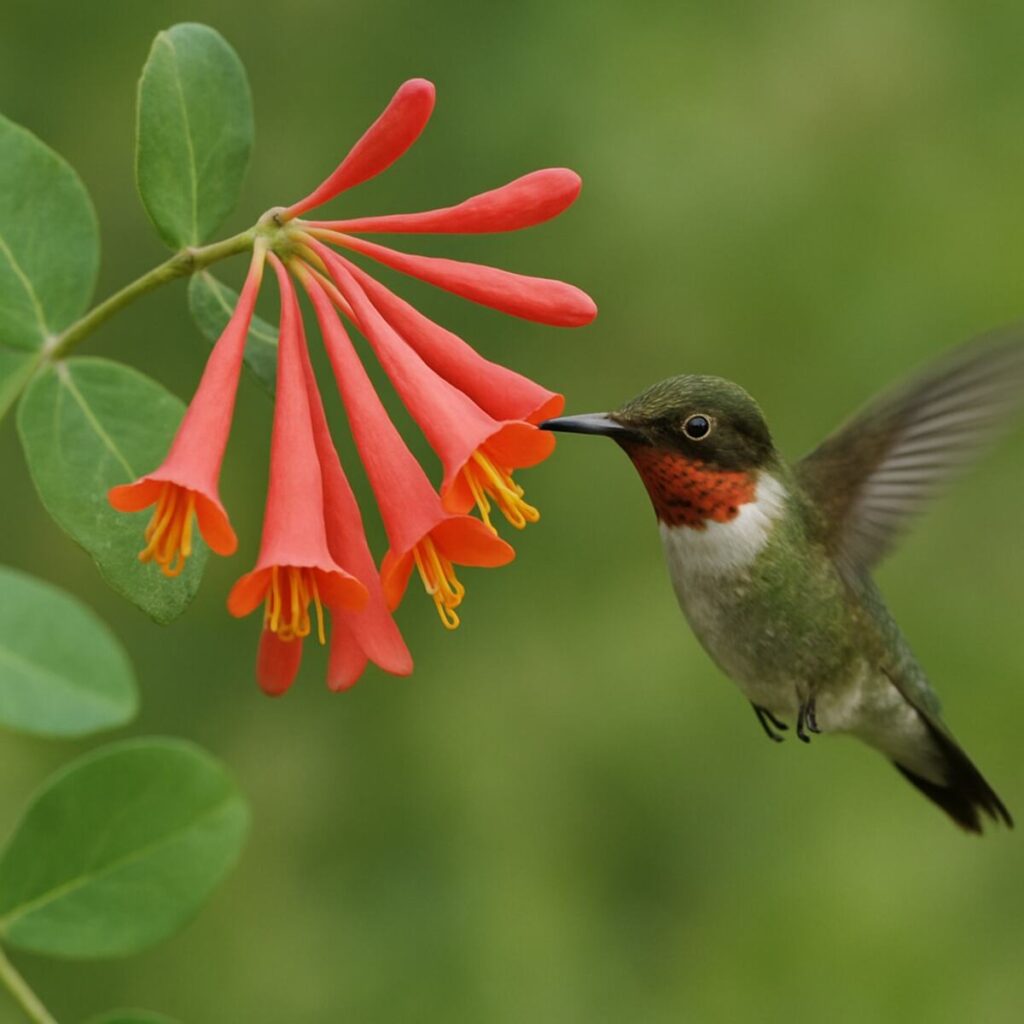
If you want to invite nature into your garden, honeysuckle is indispensable. Its tubular flowers are highly attractive to hummingbirds, bees, and butterflies. When selecting a vine, looking for pollinator friendly honeysuckle varieties is key.
The native Coral Honeysuckle (Lonicera sempervirens) is one of the absolute best choices. Unlike some invasive Japanese varieties, the Coral Honeysuckle is well-behaved and non-invasive, blooming almost continuously from spring through fall. Its vibrant red and yellow flowers are a magnet for hummingbirds, and the subsequent red berries feed local songbirds in the autumn.
Engineering the Ascent: Supports and Structures
Even the most beautiful vine will languish in a tangled heap on the soil without proper support. The architecture of your vertical garden is just as important as the plants themselves.
Building the Foundation: How to Install Garden Trellises
A trellis is a simple, effective way to support twining vines and tendril-climbers against a wall or fence. Knowing how to install garden trellises correctly ensures that your plants stay upright through heavy winds and storms.
- Choose the Right Material: Wood, metal, and wire all work well. Cedar or redwood is naturally rot-resistant if you prefer wood.
- Leave a Gap: Never attach a trellis flush against a solid wall. Vines need air circulation to prevent fungal diseases, and they need space to wrap their tendrils around the rungs. Mount the trellis on wooden blocks or use specialized wall spacers to leave a 2- to 3-inch gap between the trellis and the wall.
- Secure Anchoring: If placing a freestanding trellis in the ground, dig holes at least 18 inches deep and fill them with gravel or quick-setting concrete. A mature vine carrying foliage and rainwater acts like a sail in the wind; a weak trellis will inevitably snap.
Strength in Design: Sturdy Supports for Heavy Bloomers
While a delicate wire obelisk might be perfect for sweet peas, plants like wisteria, climbing roses, and mature trumpet vines require significantly more infrastructure. These woody vines can weigh hundreds of pounds when fully mature and wet from rain.
Providing sturdy supports for heavy bloomers is non-negotiable.
- Wisteria: Never plant wisteria against an aluminum downspout or a flimsy wooden lattice; it has the strength to crush metal and pull apart carpentry. Instead, use massive 6×6 or 8×8 pressure-treated timber posts or heavy-gauge steel beams.
- Climbing Roses: Roses do not climb on their own; they must be tied. Use heavy-duty, galvanized wire strung horizontally between sturdy fence posts, tightening the wire with turnbuckles to prevent sagging under the weight of the canes.
Creating Sanctuaries: Low Maintenance Backyard Arbors
An arbor acts as a gateway or a shaded resting spot in the garden. When designing these structures, you want to spend your time enjoying them, not repairing them. Opting for low maintenance backyard arbors ensures a stress-free experience.
Vinyl and composite arbors have come a long way in aesthetic appeal. They do not rot, peel, or require annual staining like wood does. Alternatively, heavy wrought iron or powder-coated steel provides a classic look that lasts for decades with minimal upkeep. Pair a low-maintenance arbor with a disease-resistant climbing rose or a robust clematis, and you create a storybook entrance to your garden that practically takes care of itself.
Working with Stone: Attaching Aerial Roots to Masonry
Creepers like English Ivy or Climbing Hydrangea want to scale walls naturally using aerial roots. However, attaching aerial roots to masonry comes with a caveat.
Before you allow a clinging vine to climb your brick or stone home, inspect the mortar. If your home was built before 1930, it likely has soft, lime-based mortar. The tiny, invasive rootlets of creeping vines can easily work their way into soft or crumbling mortar, expanding as they grow and causing significant structural damage.
If you have modern, Portland cement-based mortar, the wall can generally withstand creeping vines without damage. However, you should still keep vines pruned away from window frames, wooden eaves, and gutters, where they can pry apart joints and trap moisture that can cause rot.
Cultivating a Healthy Vertical Ecosystem
Growing vines is not an entirely hands-off endeavor. Left unchecked, the vigorous nature that makes them so useful can also turn them into a landscape nightmare. Proper maintenance is the key to a harmonious garden.
Protecting Your Investment: Winter Care for Woody Perennials
In colder climates, the freezing and thawing cycles of winter can be brutal on elevated plant life. Unlike ground-dwelling plants that benefit from the insulating cover of snow and fallen leaves, the stems of climbing vines are completely exposed to freezing winds.
Providing proper winter care for woody perennials is essential for their survival.
- Mulching: After the ground freezes, apply a thick 3- to 4-inch layer of organic mulch (such as shredded bark or straw) around the base of the vine. This insulates the root system and prevents frost-heaving.
- Wrapping: For borderline hardy vines (such as climbing roses in Zone 5), consider wrapping the lower canes in burlap. This protects the wood from desiccation (drying out) caused by harsh winter winds and bright winter sun.
- Hydration: Ensure your vines are well-watered going into the late fall. A dehydrated plant is much more susceptible to winterkill than one with fully hydrated cells.
The Responsibility of the Gardener: Invasive Species Management in Gardens
It is an unfortunate reality that some of the most popular, fast-growing vines introduced into the horticultural trade have become ecological menaces. Plants like English Ivy, Japanese Honeysuckle, Kudzu, and Oriental Bittersweet escape garden cultivation and smother native ecosystems, pulling down mature trees and outcompeting local flora.
Practicing responsible invasive species management in gardens is a duty for every home gardener.
- Research Before You Plant: Always check your local agricultural extension’s list of invasive species before buying a vine. What is perfectly well-behaved in arid Arizona might be a highly invasive menace in the humid Carolinas.
- Eradication: If you inherit a property smothered in an invasive vine, manual removal is often the most effective method. Cut the vines at the base to kill the upper growth in the trees, then carefully dig out the root crowns.
- Choose Native Alternatives: Instead of planting invasive English Ivy as a ground cover, consider native Wild Ginger or Allegheny Spurge. Instead of Japanese Wisteria, plant American Wisteria (Wisteria frutescens), which is less aggressive and supports native ecology.
The Lifestyle of the Garden
A garden is not just a place to work; it is a place to live, relax, and retreat from the chaos of modern life. When you successfully integrate vines into your landscape, you are doing more than just gardening—you are building outdoor architecture.
Imagine it: a warm Saturday afternoon in late June. You step out onto your patio, the air heavy with the sweet, intoxicating scent of honeysuckle climbing the trellis. Above you, a heavy timber pergola is draped in the lush, dappled shade of a mature grapevine. You sit back in your favorite lounge chair under the arbor, a glass of iced lemonade in hand. In this shaded, private oasis created entirely by nature’s vertical gardeners, the stress of the week melts away. It is the perfect moment to simply enjoy the space, read a book, or even idly browse a vineyard vines outlet online on your tablet to pick up a comfortable, breezy outfit that matches the relaxed, coastal-garden vibe you have cultivated in your own backyard.
This is the true return on investment that vines offer. They transform stark, open spaces into intimate garden rooms. They absorb sound, they cool the air, and they surround you with a living embrace that traditional horizontal gardening simply cannot achieve.
Conclusion: Reaching for the Sky
Vines are the ultimate testament to nature’s resilience and adaptability. They teach us that even when ground space is limited, there is always room to grow upward.
By understanding the distinct mechanics of your plants—from honoring a thorough climbers vs creepers comparison to providing sturdy supports for heavy bloomers—you set the stage for horticultural success. Whether you are planting evergreen flowering perennial trailers to cascade over a stone wall, managing clematis pruning groups for maximum blooms, or installing fast growing vertical privacy screens for neighborhood seclusion, vines offer endless opportunities to elevate your garden design.
As you plan your garden for the upcoming season, challenge yourself to look up. Identify that bare fence, that harsh brick wall, or that empty patch of sky above your patio, and invite a vine to work its vertical magic. With the right species, careful support, and a little bit of patience, you will soon find yourself surrounded by the breathtaking, elevated beauty that only nature’s vertical gardeners can provide.
