
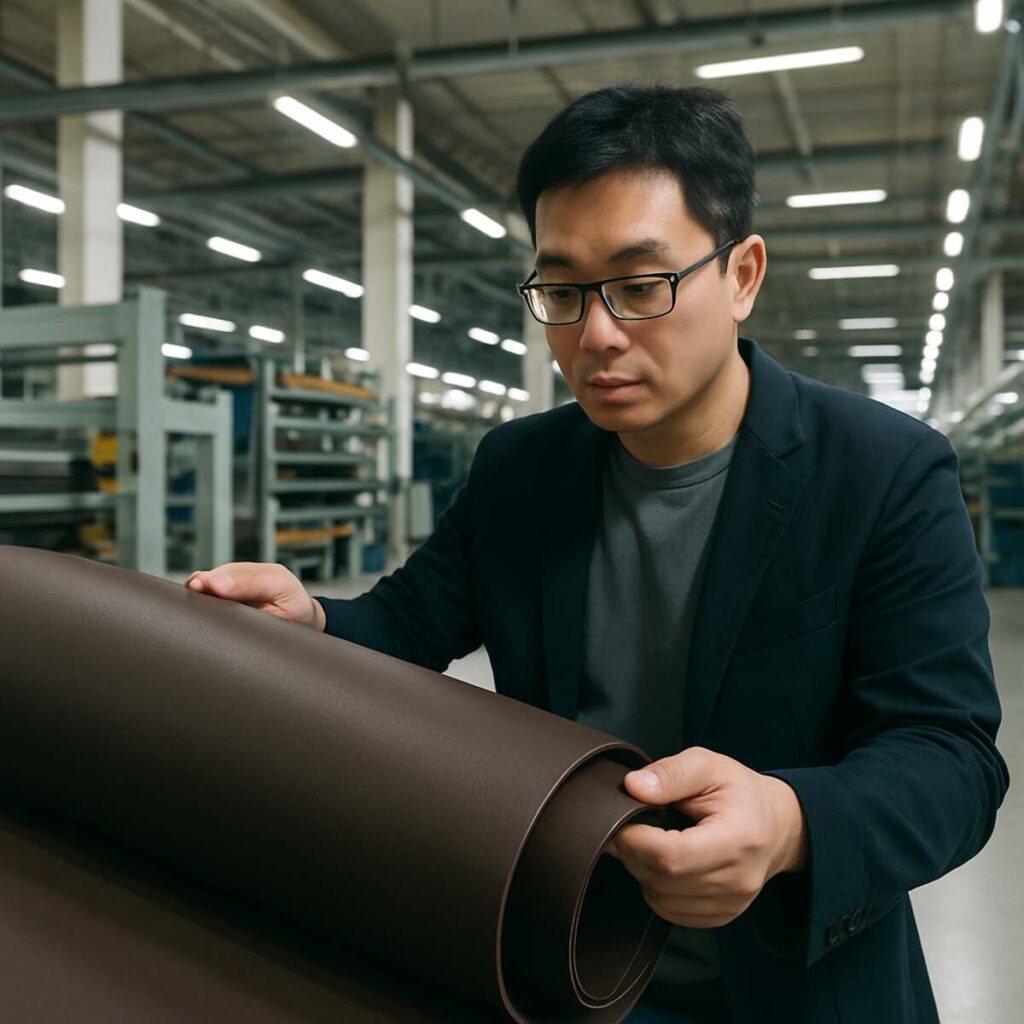
Sourcing synthetic materials for your product line can be an incredibly lucrative move, but it is not without its risks. The global synthetic leather market is booming, driven by rising demand in the fashion, automotive, furniture, and footwear industries. At the heart of this global supply chain is China. Finding a reliable China faux leather supplier can dramatically reduce your production costs while giving you access to cutting-edge material innovations. However, the distance, language barriers, and variations in manufacturing standards mean that quality control (QC) is the single most critical factor in your sourcing journey. Read the Best info about China faux leather supplier.
Whether you are a seasoned buyer or venturing into the market for the first time, establishing a robust quality control system is non-negotiable. An unreliable faux-leather manufacturer can cost you thousands of dollars in defective goods, shipping delays, and a damaged brand reputation.
This comprehensive guide will walk you through the entire process of sourcing, vetting, and managing quality control when dealing with synthetic leather suppliers. From understanding material specifications to mastering logistics, you will learn exactly how to secure high-quality materials consistently and profitably.
1. The Faux Leather Manufacturing Landscape in China
Before diving into quality control, it is essential to understand the industry’s layout. China dominates global synthetic textile production, but expertise is largely concentrated in specific regional hubs.
The Major Production Hubs
Understanding where your materials come from can tell you a lot about their quality.
- Guangdong Province: Known for high-end fashion, footwear, and automotive materials. If you have ever read a Guangzhou Shiling international leather city guide, you know this area is the undisputed capital of leather and faux leather trading. Shiling Town in the Huadu District is home to thousands of suppliers and an excellent place to source premium materials.
- Zhejiang Province (Wenzhou & Lishui): This region is a massive hub for synthetic leather manufacturing, particularly PU (Polyurethane) and PVC (Polyvinyl Chloride). Wenzhou is often referred to as the “Shoe Capital of China,” making it ideal for footwear textiles.
- Jiangsu & Fujian Provinces: These areas are known for large-scale, technologically advanced factories that produce innovative materials like microfiber and bio-based leathers.
Trading Companies vs. Direct Manufacturers
When searching for a China faux leather supplier, you will encounter both trading companies and direct factories.
- Direct Manufacturers: Dealing directly with a faux leather manufacturer gives you better pricing, direct communication regarding technical specifications, and tighter control over production. However, they may require a higher minimum order quantity (MOQ).
- Trading Companies: These entities act as middlemen. While their prices might be slightly higher, they often offer lower MOQs, better English communication, and the ability to source multiple types of materials from different factories. For faux leather wholesale buyers needing diverse catalogs, trading companies can be highly beneficial.
2. Material Deep Dive: Knowing Exactly What You Are Sourcing
Quality control starts with knowing what material you actually need. “Faux leather” is a blanket term that encompasses a wide range of chemical compositions, each with unique properties, applications, and price points. If you do not specify the exact material requirements, you leave room for the supplier to cut corners.
The Classic Debate: PU vs PVC
When sourcing synthetic materials, the most common choice is between Polyurethane (PU) and Polyvinyl Chloride (PVC). Understanding a strict PU vs PVC leather durability comparison is vital for your product’s lifespan.
- PVC Leather (Vinyl): PVC is made by combining polyvinyl chloride with plasticizers to make it flexible. It features a multi-layer structure, usually a fabric backing, a foam layer, a skin layer, and a top coating.
- Pros: Highly durable, excellent moisture and stain resistance, very cost-effective, and easy to clean.
- Cons: Can feel rigid, lacks breathability, can crack under extreme cold, and has a heavier environmental footprint.
- Best for: Marine upholstery, hospital furniture, budget bags, and restaurant seating.
- PU Leather: Polyurethane leather involves coating a fabric base (like cotton or polyester) with a flexible polymer.
- Pros: Much softer, highly flexible, closely mimics the texture of real leather, breathable, and more environmentally friendly than PVC.
- Cons: Slightly less durable against punctures than PVC; can degrade (hydrolyse) in highly humid environments over time if not formulated correctly.
- Best for: Fashion apparel, premium handbags, residential upholstery, and high-end footwear.
The Premium Choice: Microfiber Leather
If you are looking for the absolute highest quality artificial leather, microfiber is the answer. Sourcing microfiber leather from mainland china has become incredibly popular for brands looking to replace genuine leather without sacrificing quality.
Microfiber leather is made using an intricate “sea-island” spinning process that creates microscopic fibers, which are then bundled together and coated with high-grade polyurethane. The resulting structure is incredibly similar to the collagen bundles found in genuine animal skin.
One of the standout benefits of this material is breathability. If you manufacture shoes, specifying breathable microfiber leather is crucial. Unlike standard PU, which can trap sweat, high-quality microfiber allows moisture to escape, preventing odor and discomfort for the end-user. It is also exceptionally tear-resistant and aging-resistant.
Specialty Applications: Automotive and Upholstery
Different industries require vastly different material properties. You cannot use a handbag PU for a car seat.
- Automotive Standards: When sourcing for the auto industry, you must request specific automotive grade vinyl material specifications. Car interiors endure brutal conditions: UV radiation from the sun, extreme summer heat, freezing winter temperatures, and constant friction. Quality control here means testing for low VOCs (Volatile Organic Compounds) to prevent the “toxic new car smell,” cold-crack resistance down to -20°C or lower, flame retardancy (like the FMVSS 302 standard), and exceptional colorfastness to light.
- Upholstery: For furniture, the aesthetic is just as important as the durability. Engaging in custom embossed upholstery fabric production allows you to create unique textures—from classic bovine grains to exotic crocodile or ostrich patterns. QC in custom embossing involves ensuring the grain depth is consistent across the entire roll and that the “release paper” (the textured paper used to imprint the design during manufacturing) is replaced regularly to prevent the pattern from degrading over a production run.
The Future: Sustainable and Eco-Friendly Options
The textile industry is shifting rapidly toward sustainability. Modern consumers are highly aware of the environmental impact of petroleum-based plastics. Consequently, sourcing eco friendly bio-based leather alternatives has become a massive competitive advantage.
Chinese factories are now at the forefront of producing synthetic leathers derived from organic waste, such as:
- Apple Leather: Made utilizing the pomace and peels left over from the fruit juice industry.
- Cactus Leather: Utilizing the fibers of the Nopal cactus, requiring very little water to grow.
- Corn-based PU: Formulated using bio-polyols derived from corn starch instead of petroleum-based polyols.
Furthermore, traditional PU manufacturing relies heavily on DMF (Dimethylformamide), a toxic solvent. A critical quality and safety upgrade is the waterborne PU leather manufacturing process. This innovative method replaces chemical solvents with water, eliminating DMF entirely. It creates a completely odorless, non-toxic, and environmentally safe material, which is highly recommended for baby products, intimate apparel, and eco-conscious brands.
3. Vetting Your Supplier: The First Line of Quality Control
Quality control does not begin when the goods are finished; it begins the moment you select your supplier. A rigorous vetting process is the most effective way of avoiding common pitfalls when importing textiles.
Verifying Manufacturer Authenticity
It is incredibly easy to set up a professional-looking website, so you must look past the digital storefront. Learning how to verify chinese synthetic leather manufacturers is a core skill for any importer.
- Check the Business License: Request a copy of the supplier’s business license. You can use the 18-digit Unified Social Credit Code to verify their status on the Chinese government’s official NECIPS (National Enterprise Credit Information Publicity System) website. Check their registered capital; a higher capital usually indicates a larger, more stable manufacturer rather than a small trading firm.
- Request ISO Certifications: A factory with an ISO 9001 (Quality Management) certification has demonstrated a commitment to standardized quality processes. ISO 14001 specifies strict environmental management, which is particularly important in chemical-intensive industries such as synthetic leather.
- Third-Party Verification: Utilize platforms like Alibaba but rely specifically on “Verified Suppliers,” where a third-party inspection company (like SGS or TÜV Rheinland) has visited the facility and confirmed their manufacturing capabilities, machinery, and staff numbers.
Social and Ethical Compliance
Brands today are held accountable for their entire supply chain. Evaluating factory social audit reports is just as important as evaluating the physical product.
- BSCI (Business Social Compliance Initiative) and Sedex (SMETA): These are the gold standards for social audits. When you review these reports, look specifically for non-compliances regarding child labor, forced labor, fair wages, working hours, and occupational health and safety. In synthetic leather factories, proper ventilation, respiratory PPE (Personal Protective Equipment) for workers, and safe chemical storage are critical safety indicators.
Chemical Safety and Compliance
Importing textiles into major markets like the EU or the US requires strict adherence to chemical safety laws. If your goods fail customs chemical testing, they will be destroyed at your expense. You must partner with REACH and RoHS compliant fabric factories.
- REACH (Registration, Evaluation, Authorisation and Restriction of Chemicals): An EU regulation that addresses the production and use of chemical substances. Your supplier must guarantee that their synthetic leather does not contain restricted SVHCs (Substances of Very High Concern), such as harmful phthalates (often used in cheap PVC), azo dyes, and heavy metals.
- RoHS (Restriction of Hazardous Substances): While primarily associated with electronics, RoHS compliance is increasingly required for synthetic leathers used in electronic accessories (such as headphone pads, phone cases, and laptop sleeves) to ensure they are free of lead, mercury, cadmium, and hexavalent chromium.
4. The Quality Control Process: Step-by-Step
Once you have vetted your China faux leather supplier, you must establish a comprehensive QC protocol. Do not assume the factory will inherently know your quality standards. You must document everything.
Pre-Production: Specifications and MOQs
Before a single drop of polyurethane is poured, you must finalize the “Tech Pack” or specification sheet. This document should detail:
- Thickness (e.g., 0.8mm, 1.2mm).
- Backing fabric type (e.g., woven, non-woven, knitted polyester).
- Color codes (using Pantone TPG/TCX standard references).
- Weight (measured in GSM – Grams per Square Meter).
- Surface finish (matte, high gloss, embossed).
During this phase, you will also negotiate the minimum order quantity for wholesale synthetic leather. Standard MOQs range from 300 to 1,000 meters per color/style. If you push a factory to lower its MOQ drastically, it may consolidate your run with leftover materials from another batch, leading to inconsistencies in quality. It is often safer to accept the standard MOQ to ensure a dedicated, high-quality production run.
In-Line Inspection (During Production)
In-line inspections occur when 15% to 20% of your order has been completed. This is the best time to catch errors, as the factory can still halt production and fix the issue without wasting the entire batch. For synthetic leather, an in-line inspection should look for:
- Color Consistency: Are there shade variations from the start of the roll to the end?
- Thickness Uniformity: Using a digital thickness gauge to ensure the material does not fluctuate beyond a +/- 0.05mm tolerance.
- Surface Defects: Checking for pinholes, dirt spots, bubbles in the PU coating, or scratches.
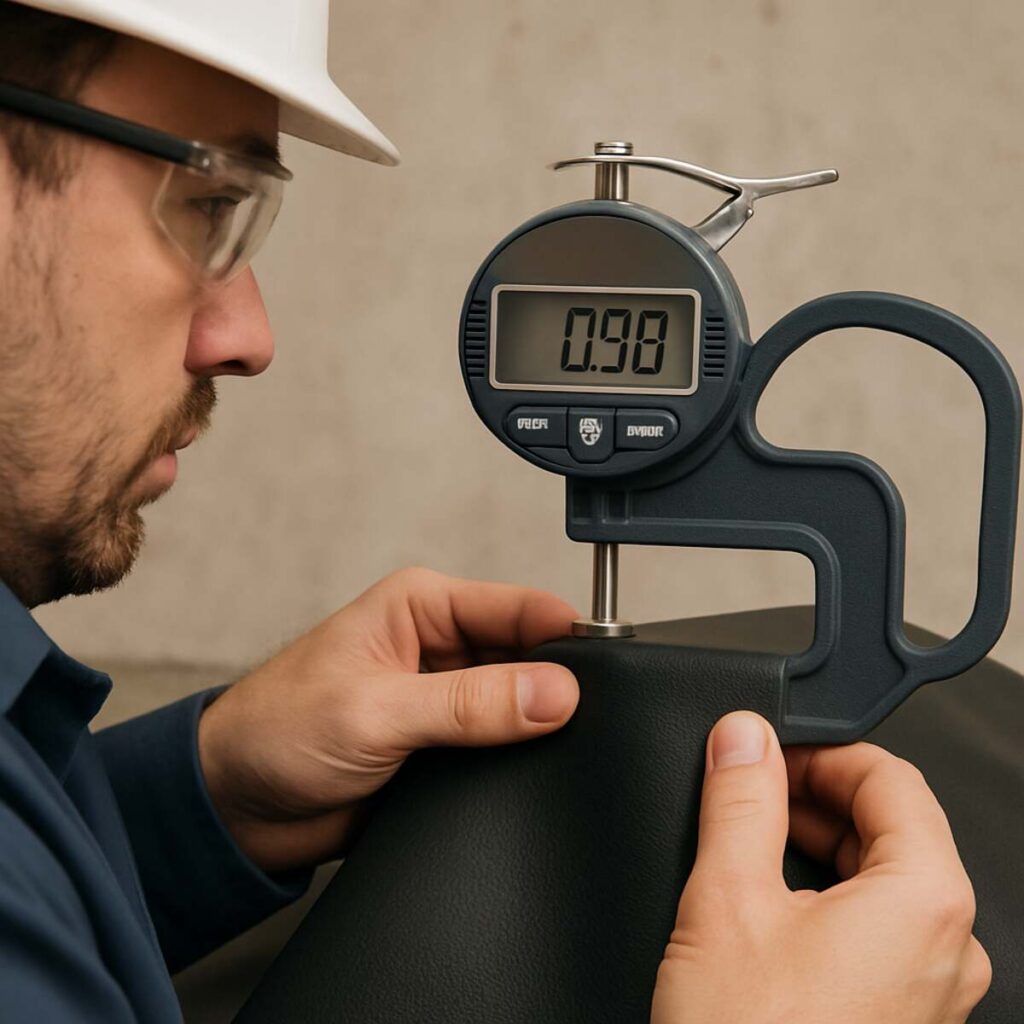
Post-Production: Testing Artificial Leather Quality Standards
When production is complete, comprehensive physical and chemical testing is required. While you can perform visual inspections, you should hire a third-party laboratory (such as Intertek, SGS, or Bureau Veritas) to conduct scientific testing to verify compliance with artificial leather quality standards.
Key tests include:
- Abrasion Resistance (Martindale or Wyzenbeek Test): Machines rub the fabric repeatedly to simulate wear. Furniture and automotive leathers require high rub counts (e.g., 50,000 to 100,000+ rubs) before showing damage.
- Peel Strength: This tests how well the PU/PVC skin adheres to the backing fabric. Poor peel strength results in the material delaminating, bubbling, or peeling prematurely.
- Tear Strength: Measures the force required to tear the material once a small cut is initiated. Crucial for footwear and bags.
- Bally Flex Test: The material is flexed thousands of times at room temperature and sub-zero temperatures. This ensures the material will not crack over time, a vital metric for automotive and winter apparel goods.
- Colorfastness: Tests how well the material retains its color when exposed to UV light, water, and physical rubbing (crocking). You do not want the dye from your faux-leather bag transferring to a customer’s white shirt!
- Hydrolysis Resistance: Specifically for PU leathers. The material is placed in a high-temperature, high-humidity chamber (commonly referred to as the “Jungle Test”) for several weeks. This mimics years of aging to ensure the PU will not break down, become sticky, or flake away.
5. Avoiding Import and Sourcing Mistakes
Even with testing protocols in place, many buyers fall into traps that cost them time and money. Here are the keys to avoiding common pitfalls when importing textiles.
The “Golden Sample” Trap
A supplier may send you an incredibly high-quality, perfectly crafted sample (the Golden Sample). You approve it, pay the deposit, and the final mass-produced units arrive feeling cheap, thin, and brittle.
- The Fix: Always cut your approved pre-production sample in half. Keep one half and send the other to the factory, signed and dated. Instruct your third-party inspector to use your retained half for a strict side-by-side comparison with the mass production goods.
Backing Material Ignorance
Many buyers obsess over the faux leather’s surface and completely ignore the backing fabric. The backing provides the material with structural integrity. If a factory wants to secretly cut costs, it will use a lower-grade, low-density recycled polyester for the backing. This leads to weak tear strength and a material that loses its shape. Always specify the GSM and composition of the backing material in your contract.
Overlooking the Chemical Smell
A strong, pungent, fishy, or chemical odor is a massive red flag. It usually indicates that the factory rushed the curing process or used cheap, highly toxic solvents (like high levels of unevaporated DMF). Not only is this off-putting to consumers, but it can also be a severe health hazard. Ensure your contract specifies “odorless production” and consider transitioning to the waterborne PU leather manufacturing process to eliminate this risk entirely.
Navigating Wholesale Markets
If you visit China to source in person—perhaps utilizing a Guangzhou Shiling international leather city guide to navigate the massive markets—beware of “stock lots.” These are leftover rolls from other brands’ productions. While faux leather wholesale stock lots are cheap and available immediately, they have zero quality guarantee, no chemical compliance certificates, and you will never be able to reorder the exact same color or texture again. Use stock lots for prototyping, but never for scalable mass production.
6. Logistics, Shipping, and Final Delivery
Quality control does not end at the factory door. How your synthetic leather is packaged and shipped dictates the condition it arrives in. Poor logistics can ruin perfect production.
Proper Packaging Standards
Synthetic leather must be packaged correctly to prevent permanent creasing, pressure marks, and moisture damage during a long ocean transit.
- Hard Paper Tubes: The fabric must be rolled tightly onto a thick, sturdy cardboard core. If the tube is weak, the roll can collapse under its own weight, causing deep wrinkles in the fabric that cannot be ironed out.
- Moisture Protection: Each roll should be wrapped in a layer of PE (Polyethene) film to protect against moisture and humidity in the shipping container.
- Outer Protection: A final layer of woven PP (Polypropylene) bagging should be applied to protect against dust, dirt, and abrasion during loading and unloading. Adding silica gel packets inside the wrapping is highly recommended to prevent mold.
Freight Planning: How to Calculate Shipping Costs for Fabric Rolls
Shipping textiles can be expensive because fabric rolls are bulky. In freight forwarding, you are charged based on either the actual weight or the volumetric weight (CBM – Cubic Meters)—whichever is greater. Because synthetic leather is often lighter than its sheer volume suggests, you will usually pay based on CBM.
Understanding how to calculate shipping costs for fabric rolls is vital for your profit margins.
Step 1: Calculate the Volume of One Roll Fabric rolls are cylinders. The formula for the volume of a cylinder is: Volume = π × r² × h (where π is approx 3.14159, r is the radius of the roll, and h is the height/width of the roll).
Example: You are buying 1.4-meter wide PU leather. The roll has a diameter of 0.3 meters (so the radius is 0.15 meters).
- Volume = 3.14159 × (0.15m × 0.15m) × 1.4m
- Volume = 3.14159 × 0.0225 × 1.4 = 0.0989 CBM per roll.
Step 2: Calculate Total CBM If you order 300 rolls:
- Total CBM = 300 × 0.0989 = 29.67 CBM.
Step 3: Choose Your Shipping Method
- LCL (Less than Container Load): If your order is between 1 and 15 CBM, you will share a container with other importers. You pay a specific rate per CBM.
- FCL (Full Container Load): A standard 20-foot container holds about 28-30 CBM. A 40-foot HQ container holds about 68 CBM. In our example above (29.67 CBM), you would perfectly fill a 20-foot container. FCL is much safer for fabric rolls because there is no risk of other companies’ heavy goods being stacked on top of your delicate materials.
Customs and Tariffs
Ensure your China faux leather supplier provides the correct HS (Harmonized System) Codes on the commercial invoice. Synthetic leathers usually fall under HS Code Chapter 39 (Plastics and articles thereof) or Chapter 59 (Impregnated, coated, covered or laminated textile fabrics). Using the wrong code can result in massive customs delays and incorrect duty charges. Provide your customs broker with all REACH/RoHS compliance certificates proactively to ensure a smooth clearance process.
7. Building Long-Term Supplier Relationships
Quality control is ultimately about people. The best contracts and inspection protocols in the world cannot force a bad supplier to care about your business. Developing a strong, respectful relationship with your faux leather manufacturer will naturally improve your product quality over time.
Clear and Continuous Communication
Language barriers can lead to disastrous misunderstandings. When communicating:
- Use simple, direct English.
- Avoid slang and idioms.
- Summarize key points in bulleted lists.
- Rely heavily on visual aids—photos, videos, and technical drawings. If you want a specific texture for your custom embossed upholstery fabric production, do not just describe it; send a physical swatch or high-resolution macro photography.
The Value of Factory Visits
If your budget allows, visit the factory in person. Walking the factory floor gives you insights no social audit report ever could. You can observe the facility’s cleanliness, the age of the machinery, how the workers handle materials, and the overall atmosphere. Face-to-face meetings also show the supplier that you are a serious buyer, which often results in your orders being prioritized and your minimum order quantity for wholesale synthetic leather being negotiated down in the future.
Constructive Feedback Loops
When you do find a defect—and eventually, you will—how you handle it dictates the future of the relationship. Do not immediately threaten to cancel the contract. Present the third-party inspection report objectively. Ask the supplier for an RCA (Root Cause Analysis) and a CAP (Corrective Action Plan). A good China faux leather supplier will take accountability, replace the defective goods, and implement new procedures to ensure the error never happens again.
8. Essential Quality Control Checklists for Faux Leather Sourcing
To make this guide as actionable as possible, here is a condensed, printable checklist for your sourcing operations.
Supplier Vetting Checklist:
- [ ] Business license verified on NECIPS.
- [ ] ISO 9001 and ISO 14001 certificates validated.
- [ ] Factory social audit reports (BSCI/Sedex) reviewed for ethical compliance.
- [ ] Chemical compliance (REACH, RoHS) guaranteed in writing.
- [ ] Verified as a direct manufacturer vs. trading company depending on MOQ needs.
Pre-Production Spec Sheet Checklist:
- [ ] Material type confirmed (PU vs PVC leather durability comparison complete).
- [ ] Exact thickness and tolerance specified (+/- 0.05mm).
- [ ] Backing fabric composition and GSM defined.
- [ ] Color matched to standard Pantone codes.
- [ ] Environmental requirements specified (e.g., eco-friendly bio-based leather alternatives or waterborne PU leather manufacturing process).
Lab Testing Checklist:
- [ ] Abrasion resistance (Martindale/Wyzenbeek).
- [ ] Peel and tear strength.
- [ ] Bally flex test (room temp & sub-zero).
- [ ] Colorfastness (light and rubbing).
- [ ] Hydrolysis resistance (Jungle Test for PU).
- [ ] Automotive grade vinyl material specifications tested (if applicable: flame retardant, UV resistant, low VOC).
Packaging and Logistics Checklist:
- [ ] Rolled tightly on hard, thick paper tubes.
- [ ] Wrapped in moisture-proof PE film with silica gel inside.
- [ ] Outer packed in durable woven PP bags.
- [ ] Volume correctly calculated (how to calculate shipping costs for fabric rolls mastered).
- [ ] Correct HS Codes confirmed for customs clearance.
Conclusion
Sourcing from a China faux leather supplier offers incredible opportunities to scale your brand, improve your profit margins, and access some of the most innovative textiles on the planet. From breathable microfiber leather for footwear to ultra-durable vinyl for marine and automotive use, the capabilities of Chinese manufacturers are vast.
However, the key to unlocking this potential lies entirely in your commitment to quality control. By understanding the intricate differences between materials, demanding strict chemical and ethical compliance, setting crystal-clear specifications, and enforcing rigorous pre-shipment testing, you mitigate the risks inherent in international trade.
Do not view quality control as a secondary task or an unnecessary expense. View it as an investment in your brand’s reputation and longevity. When you source responsibly, test rigorously, and build strong relationships with your manufacturing partners, you ensure that every roll of synthetic leather you import meets the highest standard of excellence. Start implementing these quality control tips today, and watch your sourcing operations transform from a gamble into a predictable, highly profitable process.